Choosing the Best Milk for Latte Art
Here’s the thing about latte art: you can have the fanciest machine, the steadiest hands, and a pitcher that fits your grip like a glove — but if your milk isn’t cooperating, none of that matters. Milk is your paint, your canvas medium, your everything. And not all milks behave the same way when steam hits them.
Let’s walk through what actually makes a milk great for latte art, and which options — dairy and plant-based — give you the best shot at clean, defined pours at home.
Why Milk Choice Matters So Much
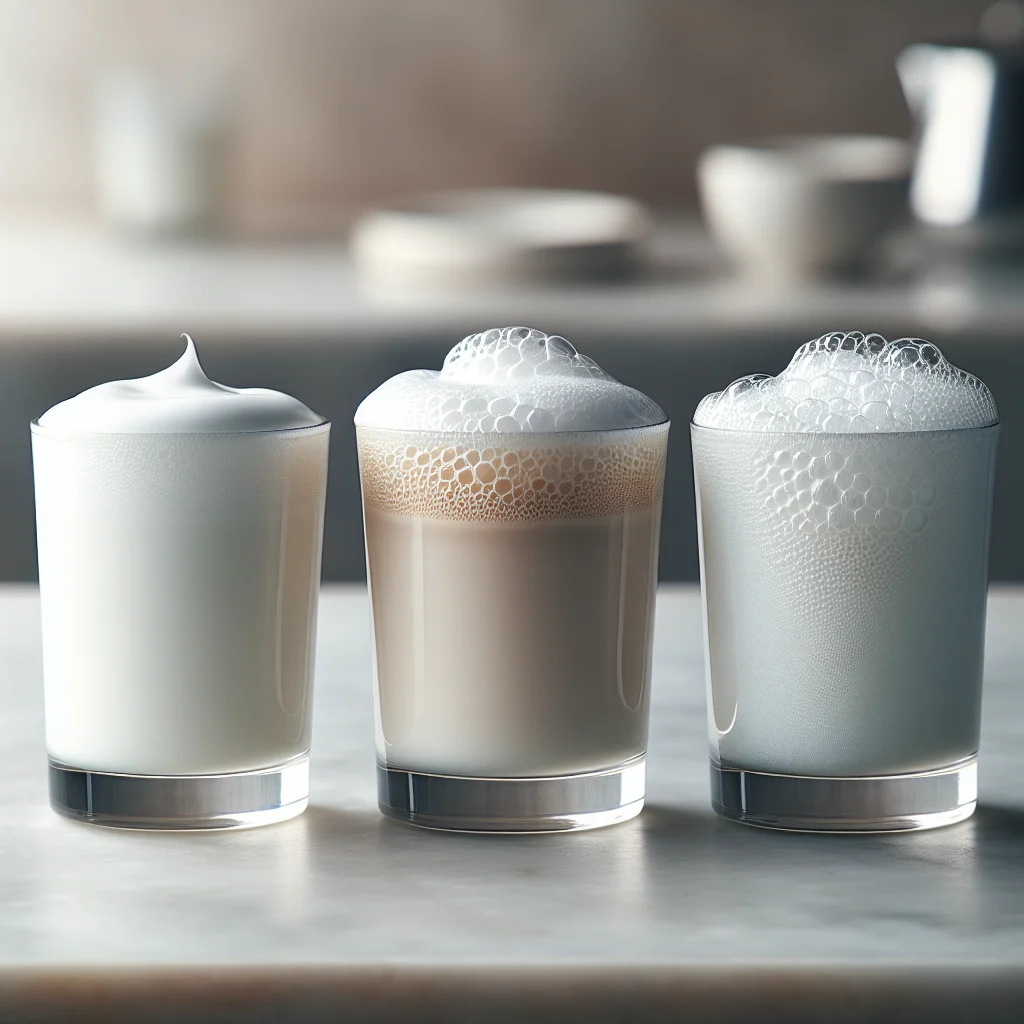
When you steam and texture milk, you’re doing two things at once: heating it and folding in tiny air bubbles to create microfoam (that velvety, paint-like consistency that sits between frothy and flat). The proteins in milk stabilise those bubbles, while the fats contribute body and sweetness. The sugar content — mostly lactose in dairy — affects how forgiving the milk is across different temperatures.
Think of it like making a vinaigrette. Fat and protein are your emulsifiers. Without enough of them, the whole thing falls apart. Too much of one and the texture gets heavy and sluggish. You’re looking for a balance that lets you pour smooth, glossy microfoam that holds a pattern in the cup.
Dairy Milk — The Reliable Standard
If you’re just starting out, whole milk (around 3.25% fat) is your best friend. It steams predictably, produces stable microfoam, and gives you a wide margin for error with temperature. The fat makes the foam silky, and the protein keeps your bubbles small and uniform. Most café baristas train on whole milk for exactly these reasons.
2% (semi-skimmed) milk works well too and is a perfectly solid choice. You’ll notice slightly less body in the foam, but it’s still very capable of holding hearts, rosettas, and tulips. Many home baristas actually prefer it because the lighter texture can make fine detail work a touch easier once your technique is dialled in.
Skim milk froths quickly — sometimes too quickly. It produces a lot of foam volume with less effort, but that foam tends to be stiff and dry rather than glossy. It’s harder to integrate smoothly into espresso, which means your latte art can look coarse or disappear fast. Not impossible to work with, but it demands more precision.
Plant-Based Milks — What Actually Works
Plant milks have come a long way, and several now steam beautifully. The key thing to know is that “barista edition” or “barista blend” versions of plant milks are specifically formulated with added fats, proteins, or stabilisers to mimic how dairy behaves under steam. They’re genuinely different from the regular carton versions, and the difference is night and day.
Here’s how the most common options stack up:
- Oat milk is the current favourite among plant-based options. Barista-formulated oat milks steam into creamy, stable microfoam that pours almost like whole dairy. It’s forgiving and naturally a bit sweet.
- Soy milk was the original plant-based café staple. It can produce good microfoam, but it’s more temperature-sensitive — overheating causes it to curdle or separate. Keep it under about 60°C (140°F) and you’ll be fine.
- Almond milk is trickier. It’s thin and low in protein, so standard versions produce weak, bubbly foam. Barista blends improve things significantly, but the margin for error stays smaller.
- Coconut milk adds richness but tends to create large, unstable bubbles. It blends nicely into the drink for flavour, but it’s not ideal for sharp latte art detail.
A Quick Temperature Note
Regardless of which milk you choose, temperature control matters. Dairy milks taste best and foam most reliably when steamed to around 55–65°C (130–150°F). Most plant milks prefer the lower end of that range. Once milk gets too hot, proteins break down, sweetness fades, and your beautiful microfoam turns into a grainy mess. If you don’t already have a kitchen thermometer, it’s a small addition that makes a big difference — our milk steaming guide covers the technique in detail.
Finding Your Favourite
The best milk for your latte art is the one that matches your taste, your dietary needs, and your willingness to practise with its quirks. Start with whole dairy or barista-blend oat milk for the easiest learning curve, then experiment from there. Once your steaming technique is consistent, you might be surprised how well even the trickier milks perform. Ready to put your perfectly textured milk to work? Head over to our pour patterns tutorials and start painting.